
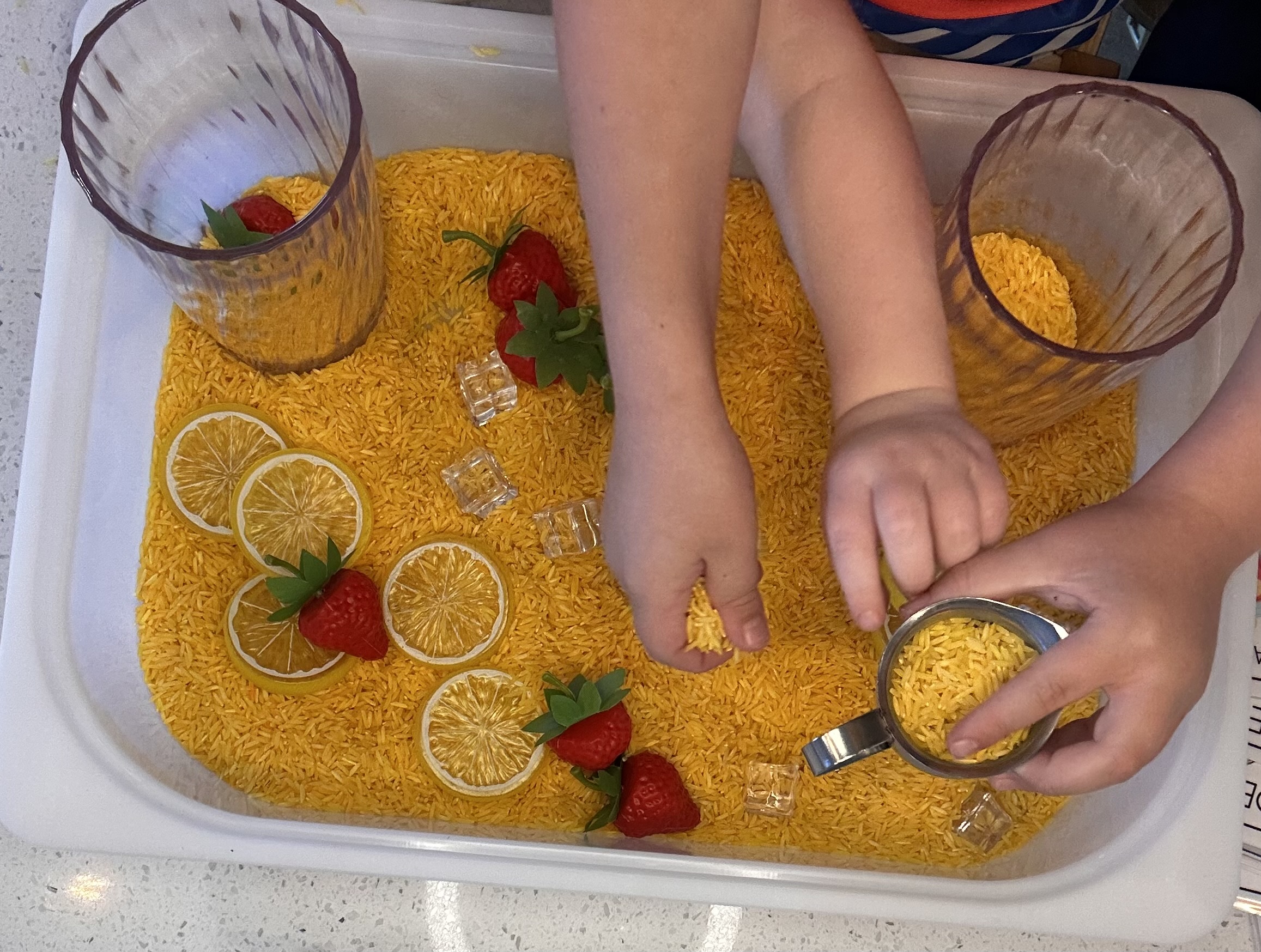
Lemonade Sensory Bin for Kids (That Kept Mine Busy for 2 Hours)

You Might Also Love: Color Water Play Bug Scavenger Hunt Cereal Necklace Craft Cookie Cutter Sandwiches
This post contains affiliate links — see our disclosure.
I was skeptical about sensory bins. Rice in a tub? That just sounds like a mess.
Then I set one up on a Tuesday afternoon and watched a two-year-old and a five-year-old play side by side for almost two hours. The two-year-old scooped and poured. The five-year-old filled lemonade orders from a little recipe card. Nobody fought. Nobody asked for a screen.
I became a believer that day.
⏱ Setup Time: 15 minutes | 👶 Ages: 2+ (recipe cards for 3+) | 🧹 Mess Level: Medium | 💰 Cost: $
What You’ll Need
- White rice (dyed yellow — see prep below)
- Yellow food coloring
- Lemon slices (real or plastic play food)
- Plastic strawberries or real strawberries
- Small cups, a scoop, and a small pitcher
- Laminated recipe cards (optional but great for 3+)
🔗 Large sensory bin or clear plastic storage tub
🔗 Play food lemon and strawberry set
🔗 Yellow food coloring
How to Make Yellow Sensory Rice (Do This the Night Before)

This is the only real prep step and it takes less than 5 minutes of hands-on time:
- Pour rice into a zip-lock bag
- Add 10–15 drops of yellow food coloring
- Seal and squish until coated
- Spread on a parchment-lined baking sheet
- Let dry overnight (or a few hours)
- Store in a zip-lock bag — it keeps for months
The rice reuses perfectly. Make a big batch once and you’ll have it ready anytime.
Setting It Up
Step 1 — Pour yellow rice into your bin.
Step 2 — Add lemon slices, strawberries, cups, pitcher, and scoops.
Step 3 — Set recipe cards nearby in a small stack.
Step 4 — Place a towel or shower curtain liner underneath — some rice will escape, and this makes cleanup a 30-second sweep.

How the Play Works
| Age | What They Do |
|---|---|
| 2–3 years | Dig, pour, scoop, repeat — free sensory exploration. No recipe cards needed. |
| 3–5 years | Use recipe cards to “fill lemonade orders.” Be a customer and place an order. |
| 5+ years | Invent their own recipes and write their own recipe cards. Run the whole stand. |
The magic: a 2-year-old and a 5-year-old can play in the same bin, fully engaged, at the same time — just at different levels.
Kid Jobs & Adult Tips
| 👶 Kid Jobs | 💡 Adult Tips |
|---|---|
| Filling cups with rice and fruit | Don’t hover — set it up and step back. Sensory play is self-directed. |
| Running the lemonade stand and taking orders | For toddlers, skip the recipe cards entirely |
| Designing their own menu (older kids) | Add a small pitcher for extra pouring practice |
| Store rice in a zip-lock after — let it dry if damp, reuse many times |
Grandma tip: Set this up on the back porch before grandkids arrive. The “surprise reveal” makes the whole thing more magical.
Creative Variations
Strawberry smoothie stand: Pink rice + plastic strawberries and blueberries.
Bakery bin: Plain white rice or oats + small play cookies and a rolling pin. Recipe cards become bakery orders.
Ocean bin: Blue-dyed rice + plastic sea creatures + shells.
Winter bin: White rice + plastic snowflakes + silver jingle bells.

💛 Memory-Making Prompt
While they’re playing, pull up a chair and ask: “If you had your own lemonade stand, what would you name it? What would be your most popular flavor?”
Then take their order. Let them make it. Pretend to drink it with great enthusiasm.
Kids remember being taken seriously. They remember the grown-up who sat down and played along.
Frequently Asked Questions
What is a sensory bin and why is it good for kids?
A sensory bin is a container filled with materials kids can touch, scoop, pour, and explore. Sensory play supports fine motor development, concentration, and imaginative play. Kids learn through hands-on exploration, and sensory bins provide that in a contained, easy-to-clean format.
How do you make yellow sensory rice?
Add 10–15 drops of yellow food coloring to a zip-lock bag of white rice. Seal and shake until all rice is coated. Spread on a parchment-lined baking sheet and let dry for a few hours or overnight. Yellow sensory rice stores in a zip-lock bag for months and can be reused many times.
What age is a sensory bin appropriate for?
Sensory bins work well for ages 2 and up. For children under 3, skip small pieces (like loose beads or tiny toys) and supervise closely. A rice-based bin with large scoops and cups is one of the safest and most engaging options for toddlers.
How do you clean up a rice sensory bin?
Place a towel or shower curtain liner under the bin before play starts — this catches spills and makes cleanup a 30-second sweep. Let the rice dry completely before storing. A handheld dustpan or vacuum picks up any stray grains quickly.
Can you reuse sensory bin rice?
Yes. Dyed sensory rice lasts for months when stored dry in a zip-lock bag. Let it air out after play to prevent clumping. One batch of yellow rice can be reused dozens of times for sensory bins, pouring activities, and play-based learning.
📌 Save This for Later!
Pin this so you have it ready the next time you need an easy afternoon activity.
🎁 Want 9 More Ideas Like This?
Download the free Connecting with Your Kids Starter Guide — 10 simple activities with supply lists, step-by-step instructions, and tips for every age.
Follow along at @doublebatchlife on Instagram — simple, affordable activity ideas every week.
Written by
Double Batch | doublebatchlife.com | Last updated: June 2026
3 Comments
Comments are closed.