
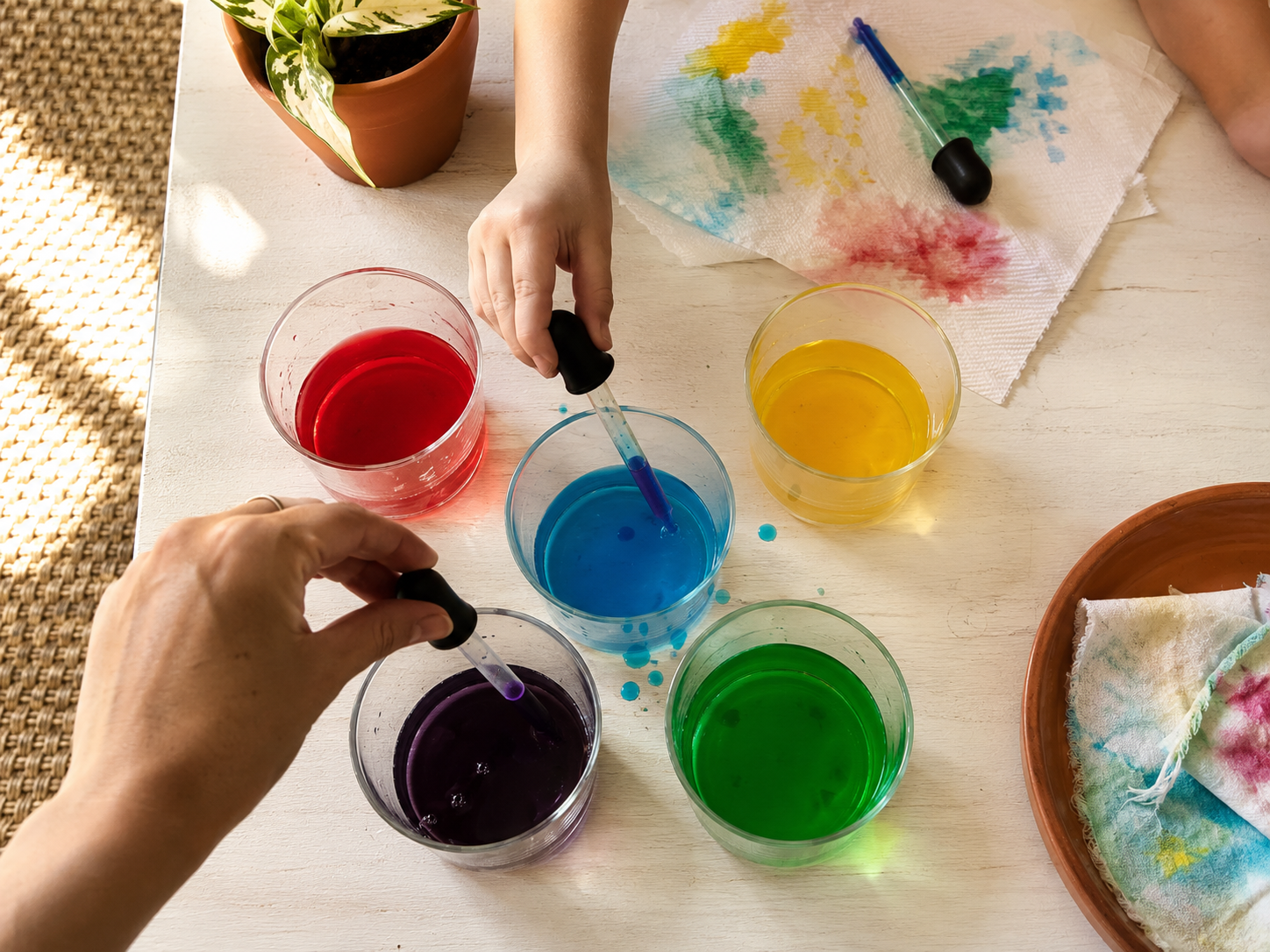
Color Water Play for Kids (The Watercolor Tablet Activity They Won’t Stop Talking About)

You Might Also Love: Lemonade Sensory Bin Chalk Obstacle Course Cereal Necklace Craft Bug Scavenger Hunt
This post contains affiliate links — see our disclosure.
Drop a small watercolor tablet into a cup of clear water and watch a child watch it dissolve.
They will not look away. They will lean in. Some kids will gasp. They will want to do it again immediately with a different color.
That moment — the tablet hitting the water, the bloom spreading through the cup — is pure, unfiltered kid magic. For about fifteen cents.
What follows is an hour of experimenting with color mixing, pouring, dripping, and discovering. Kids learn more about color in one afternoon of water play than in any worksheet about the color wheel.
⏱ Setup Time: 5 minutes | 👶 Ages: All ages | 🧹 Mess Level: Medium (best outside) | 💰 Cost: $
What You’ll Need
Watercolor tablets (dissolving, kid-safe) — OR liquid food coloring
Clear cups or containers — various sizes
A small pitcher or large pouring cup
Medicine droppers or pipettes
Water
🔗 Dissolving watercolor tablets, kid-safe
🔗 Dropper / pipette set for kids
🔗 Stacking cups in various sizes
Why Watercolor Tablets Over Food Coloring
Both work — but tablets are worth calling out because they dissolve slowly (mesmerizing to watch), they’re made for kids (washable), and each creates a bright, distinct color that makes mixing more precise and interesting.
If you only have food coloring, use a few drops per cup diluted with water. Different experience, same concept.
Setting It Up

Best done outside on a table with a towel, shower curtain liner, or white plastic tablecloth underneath (the white surface makes colors pop).
- Fill several clear cups about 2/3 full with water
- Drop one watercolor tablet in each cup — don’t stir yet. Let kids watch it dissolve.
- Set out empty cups for mixing experiments
- Fill your pitcher with fresh water
- Set out the droppers/pipettes
Let kids find the setup already going — tablets already dissolving when they arrive.
How the Play Works
Step 1 — Watch the tablets dissolve.
This alone takes 5–10 minutes of fascinated watching. Ask: “What do you think happens if you stir it? What if you don’t?”
Step 2 — Introduce the droppers.
Show how to suck up color and release it into a different cup. “What do you think will happen if blue goes into the yellow cup?”

Step 3 — Step back.
The questions, discoveries, mixing, and pouring — it’s all theirs now. Your job: ask curious questions and be enthusiastic about what they find.
“What color did you make? Does it have a name? What happens if you add more yellow?”
Step 4 — Extend it.
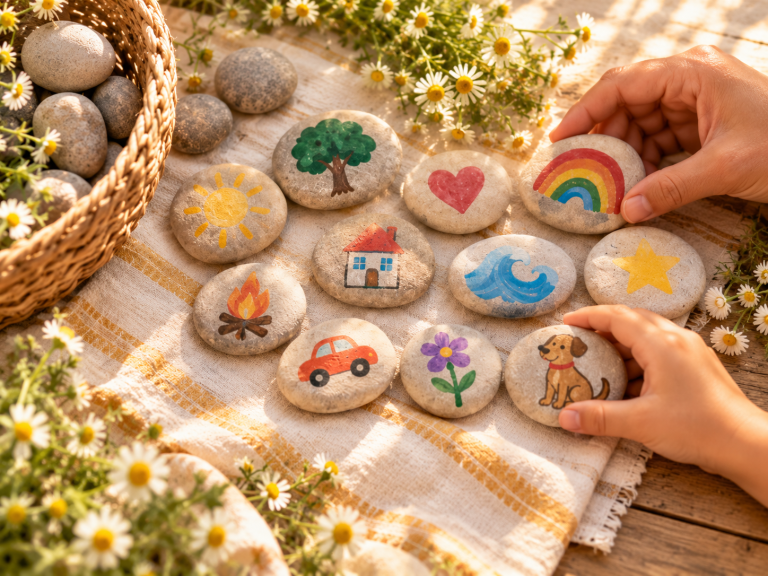
Drop colored ice cubes in and watch them melt. Or paint rocks with the colored water. Or drip onto coffee filters to make tie-dye flower art.
The Science Inside the Play
Kids don’t need to know they’re doing science for it to be science:
- Color mixing — Red + blue = purple. Blue + yellow = green. Hands-on, in real time.
- Dilution — More water = lighter color. More color = darker. Visible and controllable.
- Prediction — The dropper naturally encourages “what do you think will happen?” before each action. That is exactly how scientists think.
Kid Jobs & Adult Tips
| 👶 Kid Jobs | 💡 Adult Tips |
|---|---|
| Everything — they’re the scientist | Wear old clothes — watercolor tablets wash off skin but stain fabric |
| Mixing colors, making predictions, recording results | Use a white tablecloth underneath outside — colors look beautiful against white |
| Naming the new colors they create | Let the mixing get muddy — the brownish-gray mystery cup is one of the most important discoveries |
| Painting rocks or coffee filters with the colored water | Grandma tip: buy a small pack of tablets and keep in the activity drawer. Five-minute setup, zero planning. |

Creative Variations
Frozen color experiment: Freeze colored water into ice trays. Watch them melt and mix outside.
Coffee filter flowers: Drip colored water onto flat coffee filters. Let dry. Twist the center, secure with a pipe cleaner — instant colorful flower.
Rock painting: Use the colored water to paint rocks. Let dry. Colors come out soft and beautiful.
Color mixing chart: Draw a grid on paper and challenge older kids to fill each square with every possible two-color combination.
💛 Memory-Making Prompt
Look at all the colors together and ask: “If you could invent a totally new color that doesn’t exist yet, what would it look like? What would you call it?”
Kids take this question completely seriously and give the most specific, wonderful answers. Write it down. It’s worth keeping.
Frequently Asked Questions
What is color water play for kids?
Color water play is a sensory and science activity where kids use colored water, clear cups, and droppers to mix colors, pour, and experiment. It teaches color mixing, dilution, and scientific thinking through hands-on play. It works for all ages and requires minimal supplies — just water, clear cups, and color (food coloring or watercolor tablets).
What are watercolor tablets and where do you get them?
Watercolor tablets are small, dissolvable color discs made specifically for kids’ water play and art activities. They dissolve slowly in water, creating bright, saturated colors that are washable and non-toxic. They’re available on Amazon, at craft stores like Michaels, and in many toy stores. Watercolor tablets are preferred over food coloring for this activity because they dissolve visibly (more mesmerizing) and wash off skin easily.
What age is color water play appropriate for?
Color water play works for all ages. Toddlers (2–3) love pouring and watching colors swirl. Preschoolers (3–5) get excited about mixing and naming new colors. Kids 6+ can do structured experiments — making predictions, testing hypotheses, and recording results. The dropper activity is easiest for ages 3+; younger toddlers can use cups and spoons instead.
How do you set up color water play for toddlers?
Fill several clear cups 2/3 full with water, drop one watercolor tablet into each cup, and let them dissolve before kids start playing. Add empty cups for mixing, a small pitcher of fresh water, and medicine droppers. Set up on a table outside with a white tablecloth underneath. Total setup time: about 5 minutes.
What can you do with colored water after the activity?
Colored water can be used to paint rocks (let dry for soft watercolor effect), dripped onto coffee filters to make flower art (fold and secure with a pipe cleaner when dry), frozen into colored ice cubes for another activity, or poured into the yard. Watercolor tablet water is non-toxic and safe for grass, plants, and drains.
📌 Save This for Later!
Pin this so you have a no-prep outdoor science activity ready anytime.
🎁 Want 9 More Ideas Like This?
Download the free Connecting with Your Kids Starter Guide — 10 simple activities with supply lists and step-by-step instructions for every age.
Follow along at @doublebatchlife on Instagram — simple, affordable activity ideas every week.
Written by Double Batch | doublebatchlife.com | Last updated: June 2026
4 Comments
Comments are closed.